Really it’s afterquake; I’m not sure how much math will be here. But anyway, a few more comments on what happened, just because.
An event such as this allows for an evaluation of systems and protocols that you have in place. You can do simulations, but quite often you aren’t willing to invite any real risk in an exercise — the stress on the system isn’t real. So sure, you can time how long it takes for a response to happen in a test or know that a backup system is present, but under real conditions things fall apart quickly. You have different traffic patterns because of fallen trees and traffic lights that are out of commission. That backup system didn’t engage because of an overlooked problem, and you never actually tried it out because you didn’t want any downtime. At best you can find things that worked but would work even better or be useful in that situation, but never noticed because you weren’t in that situation. Hey, you know what? We need an emergency light here! Or, this system status data would really be useful to have in real-time. So there are flaws and potential improvements that only come to light under actual stress.
It took me more than an hour to get home, when it usually takes me less than 30 minutes. The district DOT people closed off Rock Creek Parkway to southbound traffic, which they normally do at 3:45 PM, but they did it at 2:30 and forced a bunch of Virginia-bound drivers into the downtown area to find another bridge. Bad call, IMO. Surprises are bad — I think you want to keep routines as constant as possible. Disruptions to routine usually makes things worse. Crossing the Potomac requires a bridge or tunnel, and shutting off a main route to one of them is one reason traffic was so heavy. There are more options for getting into Maryland.
I’m not at liberty to discuss the operations response at work, but I’ll put it this way: I’m sure the press would not have been shy about pointing out problems had they arisen. If I had not been caught up in the response, I probably would have appreciated this more in real-time: I work with a bunch of professionals. People who do what they need to do, without being told — checking on systems, making sure a backup has kicked in if there’s a problem with the primary, and then diagnosing what that problem is when they find one. And I cannot fathom why there are those in elected positions who think it’s worthwhile to put pressure on these people, essentially inviting them to leave government service, by under-compensating them so that they would have to be replaced by less capable people. This attitude filters down either by diffusion or by direct pressure. If you continue along that path you’ll be left with people who are senior enough that staying is still worthwhile since they are heavily vested in the retirement program and marginally competent junior people who can’t get better jobs in the private sector. When the senior people retire, the system will crumble. Maybe that’s what people are looking for, as an excuse to privatize or disband more of government, but I think it’s a bad idea.
It became apparent that there are government people working in fairly critical positions whose primary means of communication is a cell phone. The cell phone system froze for a period of time after the quake, isolating these people. This is where the argument about how “the market” will provide a solution just fails. Even with whatever FCC requirements exist, the system collapsed. It wasn’t a matter of one carrier reaching saturation, to be fixed by switching providers. What if this had been more serious? Would the rationale that lives were lost because the market does not value the extra capacity really hold up? Government regulations are an absolute requirement in cases where the players cannot be trusted to regulate themselves. The mantra that less regulation is always better is sheer idiocy. We already have too many wingnuts thinking that e.g. the EPA should be emasculated. As a citizen I don’t see the upside of more air, water and land pollution. Ultimately it’s cheaper to prevent it than clean it up. We don’t need fewer people inspecting our food or maintaining our roads. We don’t need softer building codes.
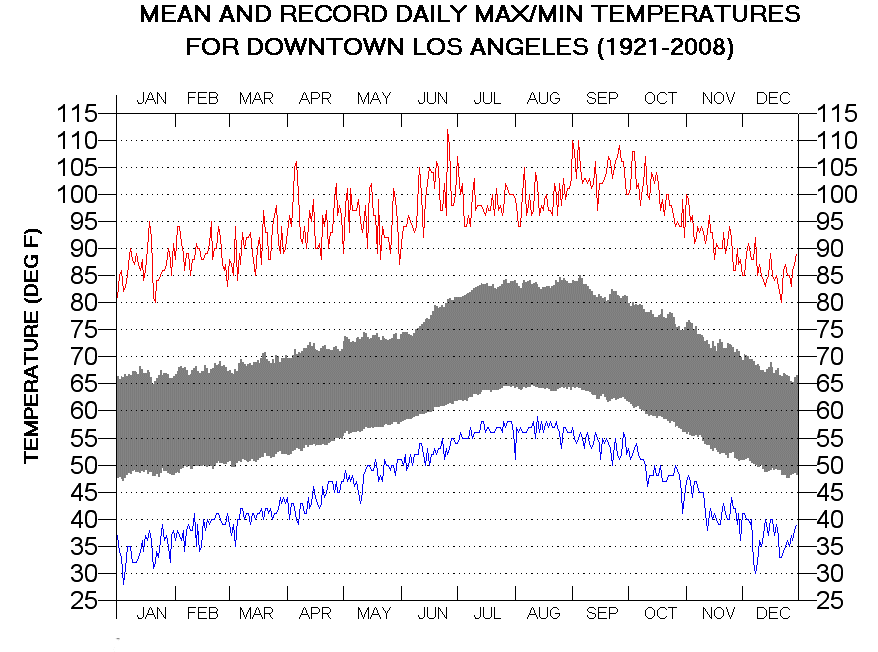
One more thing, about the mockery from the west-coasters: payback is a bitch. Yes, many people overreacted, because they are not used to earthquakes, and you stay calm because you go through it. But because they are common, you build for them. There are a lot of old buildings — i.e. structurally questionable — in DC. Not so much in LA, or especially San Francisco, because all of the really old buildings burned down, fell over and then sank into the swamp during some previous earthquake. How much of SF construction dates back before 1906? A 5.9 earthquake here is not to be compared to a 5.9 there. Here, it’s the biggest earthquake we’ve had in more than 100 years. You want a real comparison? What would be the LA reaction to a hard freeze? The city has only seen a temperature as low as 29ºF in the last 80 years — that’s the record low. Do you think maybe you’d scurry about in a bit of a panic if that were to happen again, worrying about bursting pipes and dead plants, because you aren’t built for that sort of thing? DC may not handle snow very well (not many really big cities do), but we get freezing weather quite a bit. It’s not a problem. I’ll keep a snarkball in the freezer, ready to throw at you, in case this ever happens.